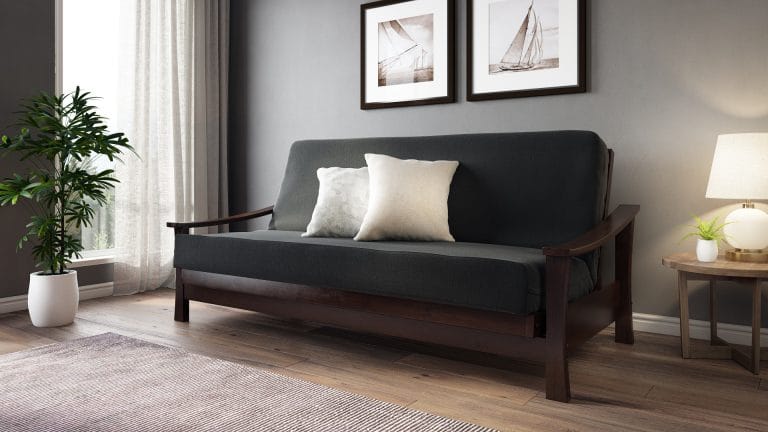
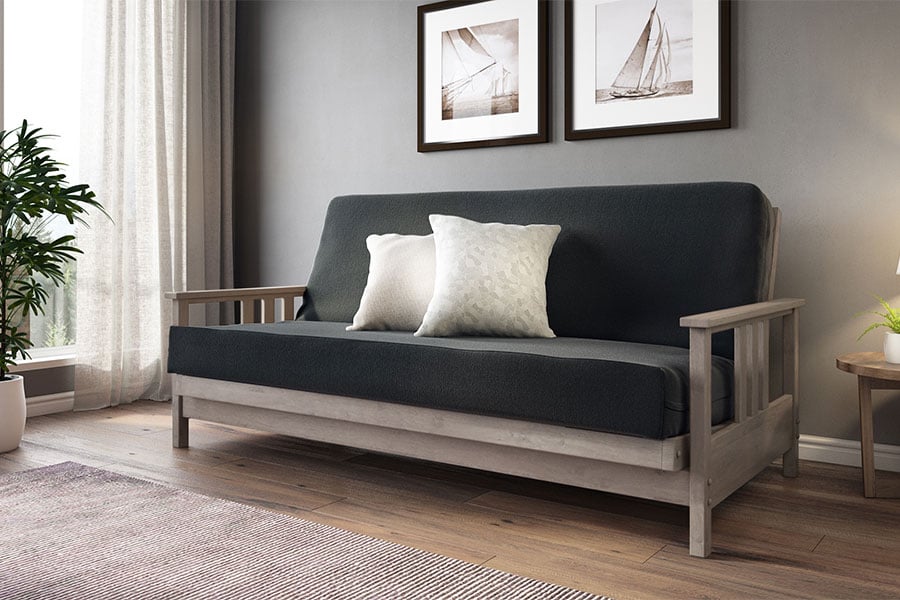
Understanding the Differences in Futon Frame Quality
Choosing the right futon frame is just as important as choosing the mattress, especially if you use your futon frequently as a sofa or as an everyday bed. The frame carries the full weight of the mattress and the people on it, and it also takes the strain of every conversion from sofa to bed and back again. Understanding the differences between frame materials will help you pick quality futon frames that match your budget, your space, and how often you plan to use them.
Why Frame Quality Matters
Every time you sit down, stretch out, or fold your futon open and closed, the frame absorbs that force. A strong frame will feel stable and smooth to operate for years; a weak one can start to wobble, squeak, or even crack much sooner than you expect. Heavier, denser wood generally translates into a sturdier frame that’s easier to convert and more comfortable to sleep on because it keeps the mattress supported evenly across the slats.
If you plan to use your futon as a primary bed or your main living room sofa, investing in a better frame is almost always worth it. For occasional guest use or very short-term setups, a lighter, budget frame can be acceptable as long as you know its limitations.
Oakwood Futon Frames: The Long-Term Workhorses
Solid oak futon frames sit at the top of the quality spectrum and are usually the most expensive. These frames are made from solid oak, a dense hardwood known for its weight and durability. You can literally feel the quality when you lift or move one: the heavier the frame, the more substantial it tends to be.
That extra weight has a practical benefit. A solid, heavy frame is easier to operate when converting from sofa to bed because it doesn’t twist or shift as much under the load of the mattress. The slats and side rails stay in alignment, and the mechanism runs more smoothly over time.
An example of a well-built oak frame is the Manhattan frame by Gold Bond. This style of frame often comes with multi-year manufacturer warranties and, with normal use, can give you decades of service. Paired with a supportive futon mattress, an oak frame is an excellent choice if your futon will be used for daily sitting and sleeping.
Hardwood Futon Frames: Best Balance of Price and Durability
Next are hardwood futon frames, which are the most popular and generally mid-priced. These frames are made from various hardwood species (such as rubberwood, beech, or mixed hardwoods) and tend to be quite durable when built well.
In many collections, the bodies of the frames are similar; what changes from model to model is the arm design. Arms affect both the look and the structural feel of the frame. A simple rule of thumb often applies: the thinner and lighter the arms, the more budget-oriented the frame; the wider and more substantial the arms, the heavier and more stable the frame—and typically, the higher the price.
Hardwood frames are an excellent fit if:
- You plan to use the futon regularly but want to stay within a moderate budget.
- You want something more substantial than pine or metal, without stepping all the way up to heavy oak.
- You care about how the futon looks as part of your main living room furniture rather than as a purely utilitarian piece.
Wall Hugger Futon Frames: Space-Saving Hardwood Designs
Within the hardwood category, wall-hugger designs deserve their own mention. Wall hugger futon frames are engineered so that you can convert them from sofa to bed without pulling the frame away from the wall. The mechanism slides the seat forward as the back goes down, keeping the back edge close to the wall.
Strata Furniture is the originator of this patented wall-hugger system. These frames typically include an extension support leg in bed position, which helps distribute weight more evenly and makes the frame feel steadier when fully opened. If your futon sits in a small room or tight alcove where you cannot afford to drag it in and out from the wall every time, a space-saving wall hugger futon is often the most practical and user-friendly choice.
Pinewood Futon Frames: Budget-Friendly and Light Duty
Pinewood frames are made from softer, lighter wood and are usually the least expensive of the wood options. Many pine futon frames come unfinished or in simple, light stains and are marketed to people who want to keep costs down or customize the finish themselves.
Because pine is soft, these frames are better suited for light to moderate use. Over time, the joints and slats can show wear more quickly than hardwood or oak. If you are furnishing a guest room that only sees occasional use, a pine frame can be a reasonable short-term or budget solution. If you are setting up your main futon for daily use in a small apartment, a pine frame is more of a temporary answer than a long-term investment.
Pine is a good option when:
- You need something for a year or two and do not want to spend more on structure.
- The futon will rarely be converted or slept on.
- You are comfortable accepting more cosmetic wear over time.
Metal Futon Frames: Lightweight and Mostly Temporary
Metal frames are at the bottom of the quality ladder, but they also tend to be the most affordable. When we talk about metal futon frames, that includes both all-metal constructions and frames with wood arms attached to a metal body.
Most budget metal frames are made from lightweight tubular slats and thin metal rails. While they may look sturdy in pictures, the hollow tubing can bend or flex under the concentrated weight of a heavy futon mattress and the people using it. Over time, the slats may bow, and you can start to feel them under the mattress, especially in areas where you sit most often.
Another issue is support. Because metal slats are narrow and rounded rather than wide and flat, the mattress does not rest as evenly as it does on wood slats. This can create pressure points and shorten the life of your futon mattress, particularly if you use it as a primary bed.
The only compelling reason to choose a metal frame is price. If you need a very inexpensive, short-term solution and you know the futon will not be used heavily, a metal frame can serve as a stopgap. For any setup that involves daily sitting and sleeping, a metal frame—especially one with a metal body and only cosmetic wood arms—is usually a false economy.
How to Match Frame Quality to Your Needs
To decide which frame category is right for you, start by thinking about how you will really use your futon:
- Everyday bed and sofa: Choose a heavier frame such as oak or high-quality hardwood, and consider a solid oak futon frames model if you want the longest lifespan.
- Main living room seating with occasional sleeping: A durable hardwood futon frames design or a wall hugger futon frame will provide a good balance of comfort, durability, and ease of use.
- Guest room or short-term setup: Pine or entry-level hardwood can be sufficient if the futon is not used heavily or converted constantly.
- Tight budget, minimal use: A metal frame is acceptable only if you fully understand it is a temporary, light-duty option.
Final Thoughts
There truly is a futon frame for every budget and every function—but not every frame is right for every situation. Heavier oak and hardwood designs cost more but reward you with stability, smoother operation, and a longer service life. Pine and metal frames keep upfront costs low, but they are best reserved for light use or temporary setups.
Before you buy, consider how often you will sit and sleep on your futon, who will be using it, and how long you expect it to last. Matching your expectations to the right frame category will help you avoid frustration, protect your mattress, and ensure that your futon feels like real furniture, not a compromise.