Futon vs Sofa Bed for a Studio Apartment
When you live in a studio apartment, one piece of furniture has to do almost everything. It needs to look like a sofa during the day, sleep like a real bed at night, and still leave enough room to walk around. That is where the “futon vs sofa bed” question really matters. Choosing between a traditional sofa bed and a futon can affect your comfort, your floor space, and how easy it is to live with your setup every single day.
Some studios are large enough that you can fit a dedicated sleeping area with platform beds and still have room for a separate sofa. But in many city apartments, that is simply not realistic. You usually have to pick one main piece that handles both sleeping and sitting. The decision often comes down to a conventional pull-out sofa bed, a convertible or click-clack sofa, or a futon with a real mattress.
Option 1: Traditional Sofa Bed Sleeper
A traditional pull-out sofa bed hides a thin mattress inside the seat. To use it, you remove the back and seat cushions, pull the metal mechanism out, open the legs, and unfold the mattress. It is a familiar solution, but in a small studio it comes with a few big trade-offs.
First, you need a lot of clearance in front of the sofa—often around 80–88 inches from the back of the frame to the foot of the opened bed. In a narrow studio, that can mean pushing other furniture aside or blocking pathways every night. If you have a coffee table in front, you must move it out of the way every time you want to sleep, then move it back in the morning.
Second, the mattress itself is usually quite thin, often under 5 inches. It folds into thirds inside the mechanism, which limits how supportive the core can be. Even with “upgraded” innerspring or foam options, most sofa bed mattresses are designed for occasional guests, not nightly use for years. If you have ever woken up with stiff shoulders or a sore lower back after a night on a sofa bed, this is why.
Finally, there is the daily routine to consider. Taking off the cushions, pulling the bed out, folding it away in the morning—this might feel manageable at first, but in a studio where you are doing it every day, the novelty wears off quickly.
Option 2: Convertible or Click-Clack Sofa Beds
Convertible sofa beds and click-clack models work differently. Instead of a separate fold-out mattress, the seat and back cushions themselves become the sleeping surface. You usually pull the seat forward or drop the back flat until it “clicks” into a bed position. This design saves space, because the bed does not extend as far into the room as a traditional pull-out.
However, most budget-friendly convertible sofa beds are not designed for everyday sleeping. The surface tends to be quite firm, and you may feel the underlying frame through the padding. Over time, the combination of sitting all day and sleeping at night can compress the foam quickly, leading to visible dips and less comfort.
If you want a convertible that truly can handle daily use in a studio, it is worth looking at better-engineered options such as premium European-style sleepers like Innovation Living. These are built with real pocket coils and stronger framing, more comparable to a firm mattress, but they usually come with a higher price tag. In that sense, you are investing in one piece that is meant to function as both a real bed and a real sofa—not a temporary compromise.
Option 3: Futon as a Primary Bed
For many studio apartments, the most flexible solution is a futon. When some people hear the word “futon,” they think of a thin cotton pad on a flimsy frame they had in college. Modern futons are very different. A quality futon is built around a separate mattress that can be as substantial as 8 inches thick or more, made with cotton, foam, coils, latex, or memory foam.
With a futon, you are choosing three components instead of one fixed piece:
- The frame style and finish
- The comfort and construction of the mattress
- The removable cover or upholstery
That flexibility is a major advantage in a studio. If the mattress wears out after years of use, you can replace just the mattress. If the frame is damaged or your style changes, you can upgrade to a different frame. If the fabric no longer fits your décor, you simply swap to a new futon sofa set cover instead of buying a whole new piece.
Unlike a built-in sofa bed mechanism, a futon makes it easy to keep the “bed” part of your setup comfortable over the long term.
Space and Layout in a Studio Apartment
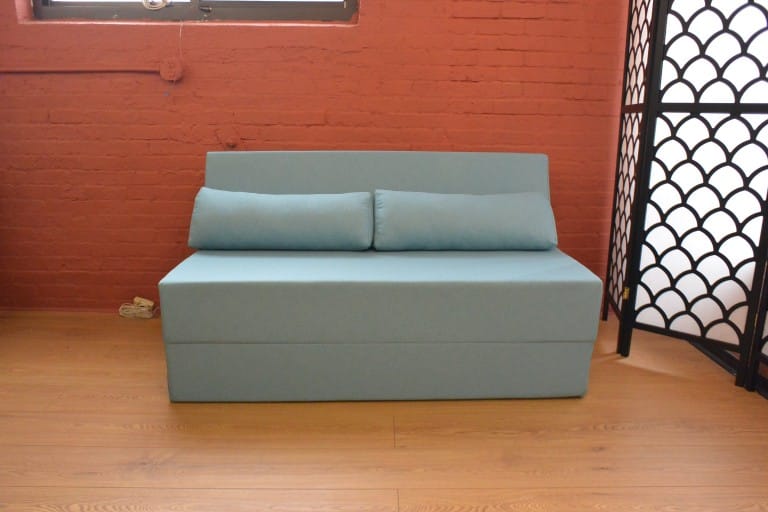
Space planning is where futons often shine in small apartments. Many futon frames are designed to open horizontally, meaning the mattress extends side-to-side rather than far out into the room. This can save crucial floor space and make the bed easier to use in narrow studios.
Because the mattress is one continuous piece that simply bends, you do not have to remove cushions or store them every night. There is no metal mechanism to pull out, and no need to find a new spot for a coffee table every time you convert the bed. In many cases, you can keep a small table, rug, or storage piece in front and still have a comfortable sleeping area once the futon is flat.
If your studio is long and narrow, you might place the futon along the longer wall so that it opens across the width of the room. In a more square space, you can center it and let it function as both your main seating and your main bed without blocking doors or windows. Compared to a traditional pull-out sofa bed, the daily routine tends to be simpler and faster.
Comfort and Customization
Comfort is where the futon’s separate mattress really makes a difference. Instead of being stuck with a thin, built-in sofa bed mattress, you can choose a futon mattress that matches your sleep preferences: firm, medium, or plush; all-cotton, foam and cotton, innerspring, latex, or memory foam. Over time, futon mattresses have evolved from basic cotton pads into full-featured sleep surfaces comparable to many conventional beds.
If you are a side sleeper, you might choose a slightly softer or thicker futon mattress. If you are a back or stomach sleeper, a more supportive core might feel better. Because the mattress is independent of the frame, you can upgrade it later without changing your entire setup. That is very hard to do with a traditional sofa bed or click-clack sofa.
Many people who once disliked futons had only experienced very basic versions in dorms or guest rooms. A properly chosen futon for a studio apartment—a supportive mattress on a solid frame, with a cover you like—can feel surprisingly close to a standard bed, while still functioning as a sofa during the day.
When a Sofa Bed Makes Sense
A sofa bed can still be the right choice in some situations. If you:
- Rarely sleep on it yourself and use it mostly for guests
- Have enough space in front of the sofa to open a full or queen sleeper comfortably
- Prefer the look of a traditional sofa with attached cushions and arms
then a well-built studio sofa bed might fit your needs. Just keep in mind that you are trading some long-term mattress flexibility for a more conventional sofa appearance. If you expect to sleep on it nightly, it is worth investing in a higher-quality sleeper from the start, not the thinnest mattress option.
When a Futon Is the Better Choice
For most people using a single piece of furniture as their main bed in a studio, a futon is often the smarter long-term choice. It offers:
- A separate mattress that can be upgraded over time
- More thickness and better support than most sofa bed mattresses
- Simpler nightly conversion, especially with horizontal-opening frames
- Customizable style through new covers and frame options
As your needs change, you can switch to a different mattress type, change the look with a new cover, or even move the mattress onto platform beds later if you eventually move to a larger place and add a dedicated sofa. A futon-based setup can grow with you in ways a fixed sofa bed cannot.
Final Thoughts: Futon vs Sofa Bed in a Studio
When you are choosing between a futon and a sofa bed for a studio apartment, think beyond the showroom photo. Picture your daily routine: opening, closing, moving tables, storing cushions, and how you will actually feel after sleeping on the same surface every night for months or years.
If you want a compact, all-in-one seating and sleeping solution that feels as close to a real bed as possible, a futon with a good mattress is often the better primary bed. You can explore a range of futons for small spaces or build out a complete futon sofa set that gives you both comfort and flexibility. For studios where every square foot matters, that ability to customize—and to keep upgrading the sleep surface over time—can make your home feel more like a true bedroom and less like a compromise.